Palm Jumeirah is the one address in Dubai that needs zero introduction anywhere in the world. Show someone in Tokyo, London, or New York a satellite image of The Palm and they know exactly what it is. That global recognition isn't just branding — it's a moat. And moats, in real estate, translate to pricing power.
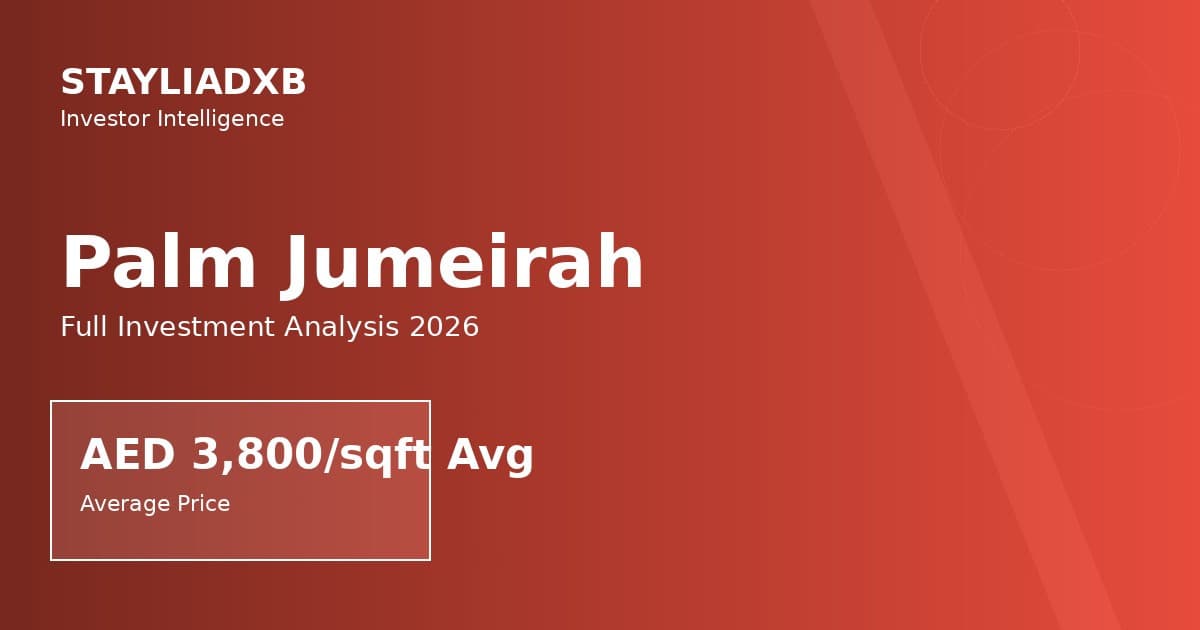
But pricing power doesn't automatically mean good investment returns. At AED 3,400–3,800/sqft for apartments and AED 15–30 million+ for villas, Palm Jumeirah is the most expensive mainstream residential market in Dubai. So the question every serious investor needs to answer is: does the math work, or is this just rich people paying for bragging rights?
I went through DLD records, Bayut and Property Finder listings, AirDNA short-term rental data, and RERA service charge filings. Here's what I found. Investor to investor.
The Market: AED 12.1 Billion in Sales, 1,229 Resale Transactions
Palm Jumeirah recorded approximately AED 12.1 billion in total residential sales in 2024, according to DXB Interact data. That's staggering for an island with a finite number of units. Of those, approximately 1,229 were resale transactions — the secondary market is active and liquid at the luxury end.
The average transaction price for apartments sits at approximately AED 3,400–3,846 per square foot, depending on the source and whether you include branded residences in the average. Villas and townhouses trade at even higher premiums — frond villas on the outer crescent regularly transact at AED 25–60 million, with signature villas exceeding AED 100 million.
For apartment investors, here are the realistic price ranges: Studios (rare on Palm — limited to a few hotel-residence projects): AED 1.5–2.5 million. 1-bedrooms: AED 2.5–4 million. 2-bedrooms: AED 4–7 million. 3-bedrooms: AED 7–15 million. Penthouses: AED 15–50 million+.
The buyer profile has shifted dramatically since 2020. DLD data shows that roughly 40% of Palm transactions in 2024 involved non-resident buyers — primarily from Russia, India, the UK, and increasingly China. End-users (people who actually live in their units) account for about 55% of purchases, with the remaining 45% being investors. That's a healthier mix than pure-investor areas like JVC or Business Bay.
Rental Yields: 4–7% Gross — The Apartment vs Villa Divide
Source: Property Monitor & RERA rental index. StayliaDXB analysis.
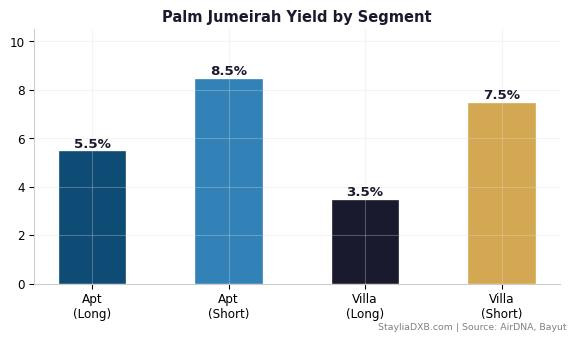
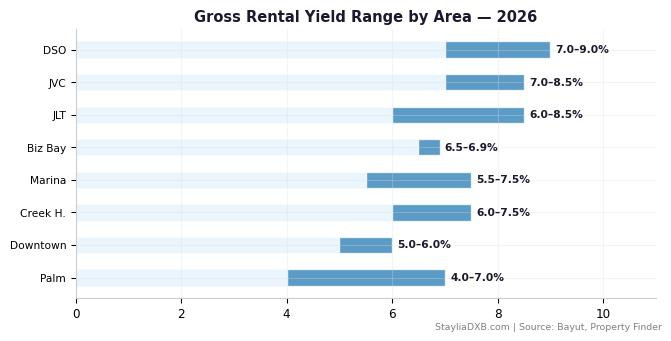
Palm Jumeirah's yield story is bifurcated. Apartments and villas operate in completely different markets:
Apartments (long-term rental): Gross yields of 5–7%. A well-located 1-bed in Tiara, Marina Residences, or Shoreline rents for AED 130,000–180,000/year against a purchase price of AED 2.5–3.5M. Net yields after service charges (which are high on Palm — AED 22–35/sqft): approximately 4–5.5%.
Apartments (short-term rental): This is where Palm gets interesting. AirDNA data shows average daily rates of AED 900–1,300/night for a well-furnished 1-bed during peak season (November–March), and AED 500–700 in summer. Annualized gross income for a premium short-term rental 1-bed: AED 200,000–300,000/year. That pushes gross yields to 7–10% on the right unit.
Villas (long-term rental): Gross yields of 3.5–5%. A standard frond villa renting at AED 800,000–1,200,000/year against a purchase price of AED 25–40M. Net yield: 2.5–3.5% after maintenance, service charges, and pool upkeep. Villas on Palm are lifestyle purchases, not yield investments.
Villas (short-term rental): The ultra-luxury play. A well-furnished frond villa with a private beach can command AED 5,000–15,000/night during peak season. Some signature villas exceed AED 25,000/night during New Year's or F1 weekends. Annualized income: AED 1.5–3.5 million. At those numbers, even a AED 30M villa can generate 5–10% gross yield. But the operational complexity is immense — staff, maintenance, guest management, and licensing requirements.
Tower-by-Tower: Where to Invest in Palm Apartments
Shoreline Apartments (16 buildings): The original Palm residential community by Nakheel. AED 2,800–3,400/sqft. Completed 2007–2009. Older finishes but unbeatable location on the trunk of the Palm with beach access. Yields: 5.5–6.5% gross on long-term. About 280 transactions in 2024 — the most liquid apartment segment on Palm. The best value entry point for Palm apartment investors.
Marina Residences (6 towers): AED 3,000–3,800/sqft. Located at the base of the trunk, overlooking Dubai Marina. Good rental demand from tenants who want Palm without the isolation. Yields: 5–6% gross. About 150 transactions in 2024.
Tiara Residences: AED 3,200–4,000/sqft. Crescent location with some of the best sea views on Palm. Strong short-term rental performance — the crescent location commands a view premium. Yields: 5–5.5% gross on long-term, 7–9% on short-term. About 90 transactions in 2024.
FIVE Palm Jumeirah: Hotel-residence by FIVE Holdings. AED 3,500–4,500/sqft. The party/lifestyle brand — pool parties, celebrity events, beach club. Yields through the hotel pool: approximately 6–8% gross. Attracts a younger, experience-driven tenant. Not for conservative investors, but the returns have been strong.
Atlantis The Royal Residences: Ultra-luxury branded residences. AED 5,000–8,000/sqft. Yields are secondary — this is a capital appreciation and prestige play. Limited inventory (only 231 residences), which supports pricing power. If you can afford it and hold for 5+ years, the appreciation thesis is compelling.
The Palm Tower by Nakheel: AED 3,200–4,000/sqft. The only high-rise on Palm (52 floors). Completed 2021. St. Regis-managed residences with access to Nakheel Mall and The View observation deck. Yields: 5–6% gross. Strong demand from both investors and end-users.
Source: DXB Interact & Property Monitor. StayliaDXB analysis.
The Scarcity Factor: Palm's Permanent Advantage
Here's the most important thing about Palm Jumeirah that separates it from every other Dubai investment: the supply is physically capped. You cannot build more land on Palm Jumeirah. The island is finished. Every new development (like Atlantis The Royal or upcoming projects on the crescent) is using the last remaining buildable plots.
This is fundamentally different from areas like Business Bay (10,000 new units), JVC (25,000+), or even Dubai Marina (limited but some infill projects). On Palm, when the last plots are built out — probably within the next 3–5 years — total residential inventory is permanently fixed.
What happens when supply is fixed and demand grows? Prices go up. It's the same dynamic that drives real estate values in Manhattan, Monaco, and Hong Kong Island. Palm Jumeirah is Dubai's version of geographically constrained luxury — and over a 10-year horizon, that constraint is the most powerful appreciation driver in the emirate.
Service Charges: The Palm Premium Nobody Mentions
Palm service charges are the highest in Dubai. Period. Here's what you're paying:
Shoreline Apartments: AED 22–28/sqft. Marina Residences: AED 25–30/sqft. Tiara Residences: AED 28–35/sqft. Branded residences (FIVE, Atlantis): AED 35–50/sqft. Frond villas: AED 3–5/sqft on the plot area, but total annual maintenance costs including pool, garden, and beach access run AED 80,000–150,000/year.
On a 1,200 sqft 2-bedroom apartment in Shoreline, that's AED 26,400–33,600/year in service charges alone — before you pay for DEWA, internet, or any furnishing. This significantly impacts your net yield and is the single biggest reason Palm gross yields look better than Palm net yields.
Who Should Buy on Palm Jumeirah?
Yes, buy if: You have AED 2.5M+ to invest and want the most globally recognized address in Dubai. You're targeting short-term rental income and can invest in proper furnishing and management. You believe in the long-term scarcity thesis and are holding for 5–10 years. You want an asset that wealthy buyers will always want — ensuring permanent demand. You value capital preservation with upside — Palm has historically been the most resilient area during downturns.
Think twice if: You're yield-focused and need 7%+ net returns — Palm won't deliver that on long-term leases. Your budget is tight — the service charges and maintenance costs on Palm will strain a tight cash flow. You need quick liquidity on villas — the AED 25M+ market takes longer to transact. You're comparing Palm yields to JVC or DSO — they're fundamentally different asset classes.
The Bottom Line
Palm Jumeirah is real estate as a store of value. It's the Rolex of Dubai property — expensive, not always the most practical choice, but universally recognized and permanently in demand. The yields are moderate, the service charges are high, and the entry price is steep. But the scarcity is real, the demand is global, and the appreciation trajectory over any 5-year period in Palm's history has been positive.
For investors with the capital, Palm should be the crown jewel of a diversified Dubai portfolio — not the entire thing. Combine it with yield-generating assets in JVC, DSO, or Business Bay, and you have a portfolio that delivers both income and long-term wealth building.
If you want to discuss specific Palm opportunities — whether it's a Shoreline apartment for short-term rental or a frond villa for long-term appreciation — let's connect.