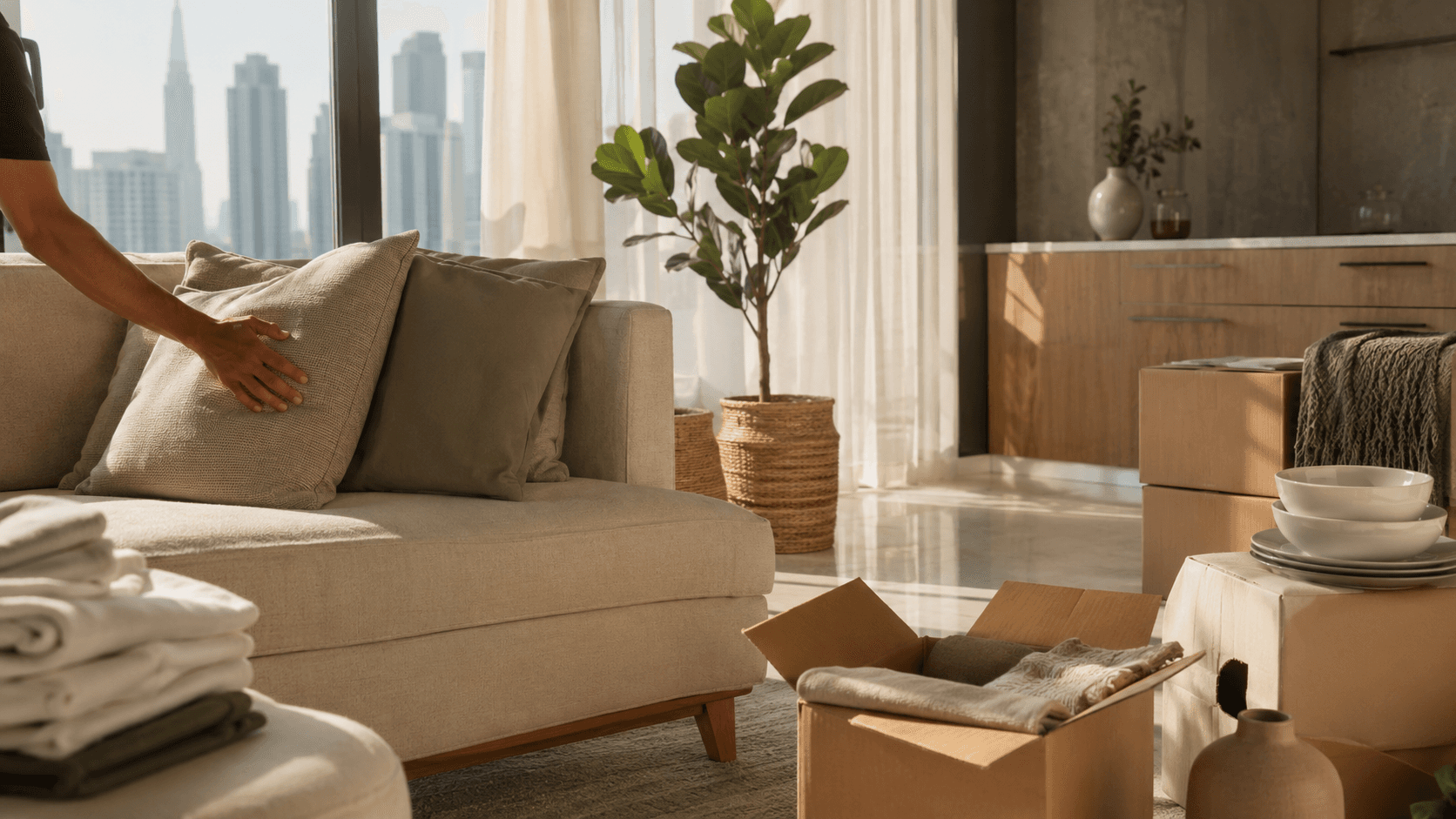
Every new STR owner gets quoted a furniture package and reacts the same way: that seems like a lot for chairs and a sofa. Then they compare it to what an under-furnished, badly-lit listing earns per night versus a properly styled one in the same building, and the number stops looking large. Here's what furnishing an Airbnb-ready Dubai unit actually costs, tier by tier, and why the cheap route usually costs more.
The Price Bands, Realistically
For a holiday-home-ready studio, budget flat-pack setups start around AED 7,500–8,000, but these rarely meet the styling and durability bar guests expect — or that DET inspection is checking for. Mid-range packages run roughly AED 10,000–22,000. A properly styled, Airbnb-ready studio — full linens, kitchenware, and photography-ready styling — typically lands around AED 22,000–40,000. Larger units scale up from there, with premium 2–3 bedroom packages reaching AED 55,000 or more.
Two costs people consistently forget to budget separately: appliances (washing machine, refrigerator) are usually excluded from furniture packages and run an additional AED 4,000–8,000, and DET-compliant kitchenware, linens, and safety equipment (smoke alarm, fire extinguisher, first-aid basics) need to be confirmed explicitly — not every furniture supplier has experience passing a holiday-home inspection.
Why the Airbnb-Ready Tier Costs More Than a Long-Let Furnish
A long-term tenant furnish and an STR furnish solve different problems. A long-let tenant lives with the same sofa for two years; a short-let unit gets a different guest testing every surface every 2–5 days. Fabrics, mattress protectors, and kitchenware need to survive constant turnover, not just look good in one listing photo shoot — which is exactly why STR-grade packages sit at the higher end of each size tier compared to a standard long-let furnish.
The Payback Math
A well-styled unit can meaningfully outperform a mediocre one in the same building on a per-night basis — a well-lit, professionally styled listing consistently commands a premium over an under-furnished one with the same layout and view. On a mid-range AED 20,000–25,000 furnishing spend, that premium typically pays itself back within a booking season or two once the listing is live and earning, after which it's straightforward upside for the rest of the furniture's useful life.
Budget for depreciation too: allow roughly AED 3,000–6,000 per multi-year cycle for soft-furnishing refresh and minor repairs (worn cushions, chipped crockery, a mattress topper past its life). Skipping this is how a once-great listing quietly slides down the ratings over 18 months without anyone noticing why.
Where This Fits Into a Purchase Decision
If you're evaluating a Dubai STR purchase, furnishing cost isn't a rounding error — it's part of the real entry cost alongside the property price itself, and it should factor into your initial ROI model the same way DLD fees and agency commission do. We cover the broader due-diligence picture in our 5-criteria framework for evaluating Dubai rental properties.
Common Questions on Furnishing a Dubai STR Unit
Can I furnish a unit myself instead of using a package company?
Yes, and it can be cheaper on paper — but factor in your own time, delivery coordination across multiple vendors, and the risk of missing a DET inspection requirement you didn't know existed. Package companies with holiday-home experience have usually already solved for this.
Do I need different furniture for a studio I'll list on Airbnb versus one I'll rent long-term?
Generally yes. STR furniture needs to handle far higher wear per year and meet DET inspection standards for safety equipment and kitchenware — a long-let furnish package usually isn't built for that turnover rate.
Is it worth buying premium furniture for a budget-tier unit?
Usually not proportionally — match your furnishing tier to your target nightly rate and building profile. A premium furnish in a budget-positioned building rarely earns back the difference; a budget furnish in a premium building will actively cap your rate.
How often does furniture actually need replacing in a Dubai STR unit?
Expect meaningful refresh needs every 2–4 years depending on turnover volume — budget the depreciation allowance mentioned above rather than treating the initial furnish as a one-time cost.
Setting Up a New Unit?
We manage furnishing standards, DET compliance, and refresh cycles across our own portfolio — happy to share what's actually worked for us before you commit to a package.